
Author : Dr. PD GUPTA
Former Director Grade Scientist, Centre for Cellular and Molecular Biology, Hyderabad, India
www.daylifenews.in
Every year, about 145,600 people are diagnosed with cancer of the colon or rectum in the US alone. Of these, about 51,000, a whopping 35% of patients, will eventually succumb to the disease and die. Colorectal cancer is the second deadliest after lung cancer, though survival rates improve dramatically if this type of cancer is detected at an early stage. But what if we can stop the cancer from ever developing in the first place? There appear to be many various risk factors for colorectal cancer, including smoking, chronic bowel inflammation, obesity, a sedentary lifestyle and also the dietary choices. Predictably, some foods increase the odds of developing colorectal cancer, and those are the usual suspects: red and processed meats. But researchers are trying to find which foods may decrease the odds of developing cancer.
While some research aims to demonstrate a correlation between diet and cancer, a team of public health specialists primarily from Harvard, T H Chan Public Health School and Harvard Medical School decided to take a step back, and look at how food affects the development of benign adenomatous polyps in the lower bowel. Why is that important towards preventing colorectal cancer? Because these noncancerous growths, also known as adenomas, may develop into malignant tumours if left untreated.
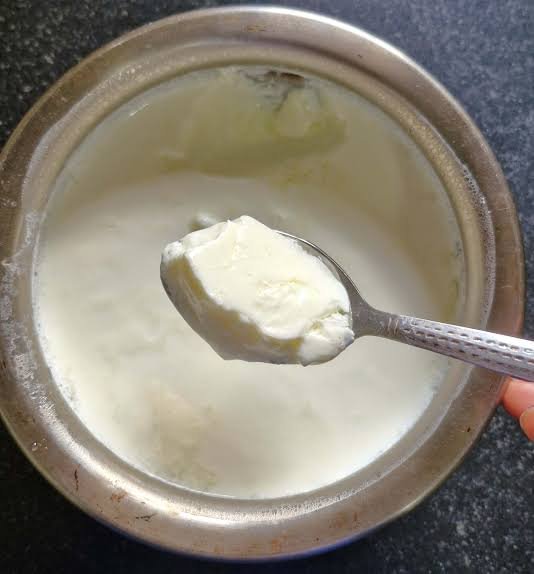
Using a broad population of 32,606 men and 55,743 women who have undergone an endoscopy between 1986 and 2012, they were able to pinpoint one particular dietary choice that seemed to have a dramatic effect on polyp formation in men: curd. Of the test population, men who had two or more servings of curd per week were 19% less likely to develop adenomas in the lower bowel, and 26% less likely to develop high-risk adenomas that are associated with possible cancerous onset. Such an effect could not be reproduced in women participants, and though the researchers don’t have a definite answer as to why that is the case, they venture that the reason is that male patients with adenomas have a more permeable gut, allowing for better absorption of the curd. The mechanism for why curd appears to reduce polyp formation in men is not fully understood, but the researchers believe it may be due to a combination of factors: probiotics in the curd that reduce levels of carcinogens in the bowel, the anti-inflammatory effects that curd has on the bowels, and its effect in strengthening the gastrointestinal wall. Other health benefits of curd: It should be noted that, in all cases, Plain curd is unsalted or unsweetened. And, if you prefer it sweetened, you can always chop up some fruit to add to the curd, but not sugar or salt, as we do normally.